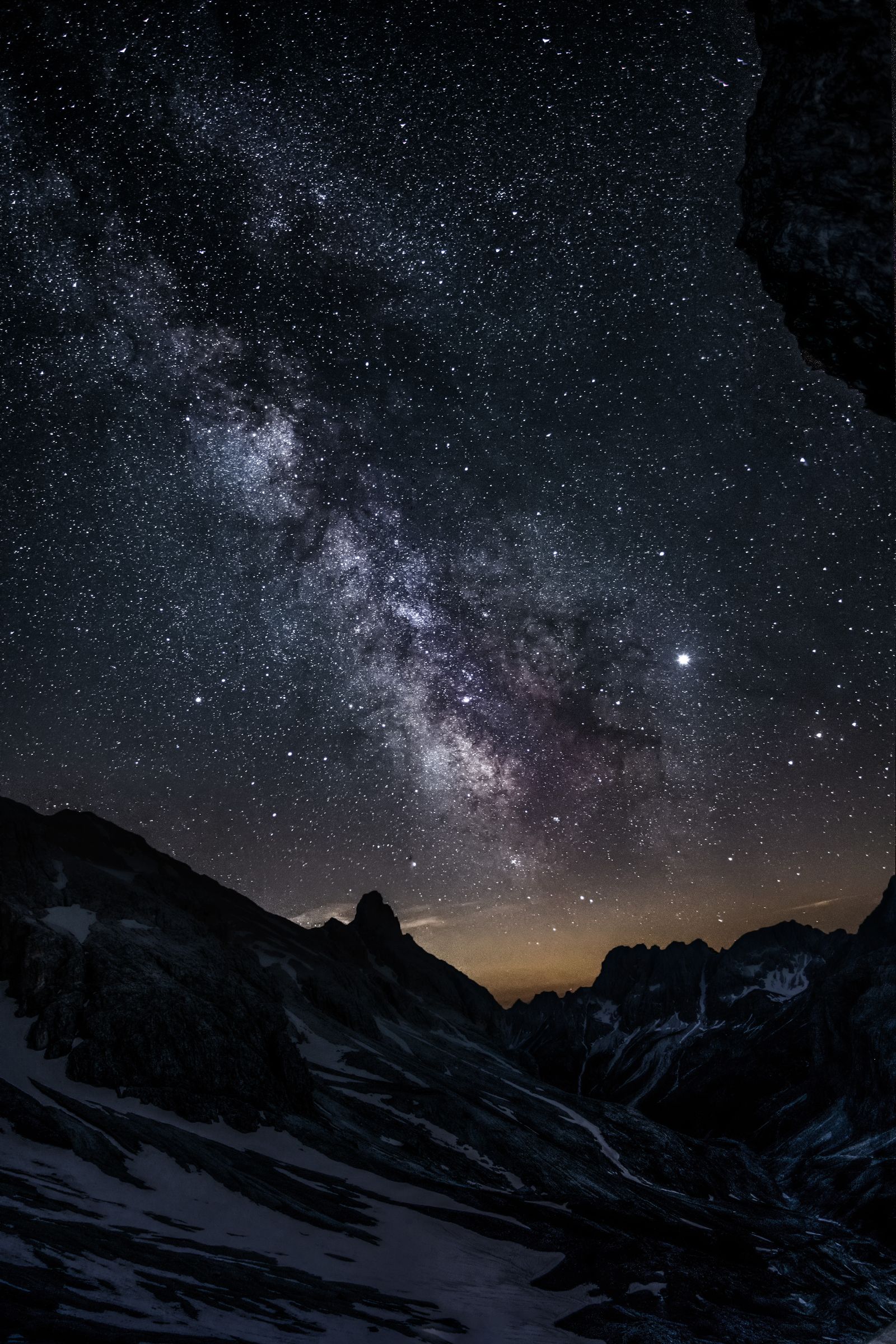
Stargazing
Far from light pollution, the summits offer a spectacular starry sky, ideal for astronomy.
🧭 Your GuideFar from cities, the Vosges summits enjoy a night sky spared from light pollution. From the Grand Ballon or Hohneck, the Milky Way reveals itself in full splendour. Observation evenings, August meteor showers: the massif is an accessible, free astronomy ground.
At a glance
When to go
- Jan
- Feb
- Mar
- Apr
- May
- Jun
- Jul
- Aug
- Sep
- Oct
- Nov
- Dec
📅 All year round on clear nights; milder evenings from July to September
Where to go
Tips & insider advice
- 🌑
Pick a moonless nightA moonless night and a clear sky reveal far more stars. Check the lunar calendar and the weather forecast before heading up.
- 👁️
Let your eyes adjustIt takes around twenty minutes for your eyes to adapt to the dark. Use a red-light torch and avoid your phone screen.
- 🧥
Wrap up warmEven in summer, it gets cold at night up on the summits. Bring a woolly hat, a down jacket and a blanket.
- 🌠
Watch out for the PerseidsIn mid-August, the Perseid meteor shower reaches its peak: the night of 12 to 13 August, between 2 am and 5 am, is often the most active.
- 🚗
Park safelyOn ridge roads such as at the Grand Ballon or the Hohneck, only park in car parks and don’t stay on the road in the dark.
- 🦉
Respect the nightKeep quiet and stay in areas open to the public: the night belongs to the wildlife too. Take all your rubbish home.
The Perseids are debris from the comet Swift-Tuttle. Their peak usually falls between 11 and 15 August, and the most active night is from 12 to 13 August, between 2 am and 5 am.
Source ↗Frequently asked questions
Where is the best place for stargazing in the Vosges?
Open summits such as the Grand Ballon or the Hohneck offer a wide horizon and skies far from the city lights. Stick to car parks and areas open to the public.
When can I see shooting stars in the Vosges?
The most famous event is the Perseids in mid-August, which usually peak on the night of 12 to 13 August. A moonless, cloudless night is ideal.
Do I need a telescope for stargazing?
No: with the naked eye or simple binoculars, the Milky Way, the constellations and shooting stars are already spectacular on a dark night.
Is stargazing suitable for children?
Yes, it’s a free and fascinating activity for children. Choose a summer evening, wrap them up warm and bring a hot drink.